
The top 5 maintenance tips for our trails:
1. Water Management: The “High-Alpine” Hydrology
In Colorado and Willow Springs specifically, water is the number one enemy of sustainable trails. Between rapid snowmelt in spring and afternoon thunderstorms in July, trails can turn into gullies overnight if water isn’t diverted.
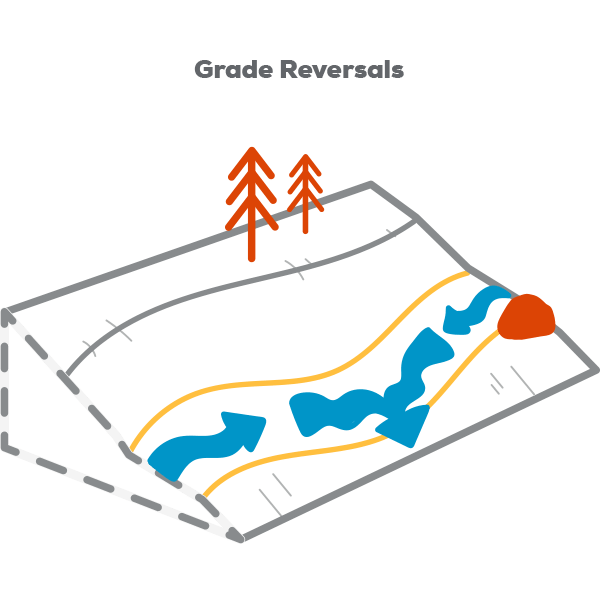
- The Principle: Never let water run down the trail for more than 50 feet. Get it off the trail and onto the hillside.
- The Fix: Aggressively maintain Grade Reversals (rolling dips). Unlike a standard “water bar” (which often clogs or rots), a grade reversal creates a subtle dip in the trail that forces water to sheet off the side.
- Willow Springs Specific: Ensure outflow ditches are wide and cleared of pine sand/dirt to handle high-volume surges during rain and snowmelt. ALWAYS throw the dirt back into the trail below the diversion.
2. Bust the “Berm” (The Bathtub Effect)
Over time, footsteps and bike tires push dirt to the outer edges of the trail, creating a raised ridge of soil called a “berm.” This artificial dam prevents water from flowing off the side, turning the trail into a canal or a muddy bathtub.
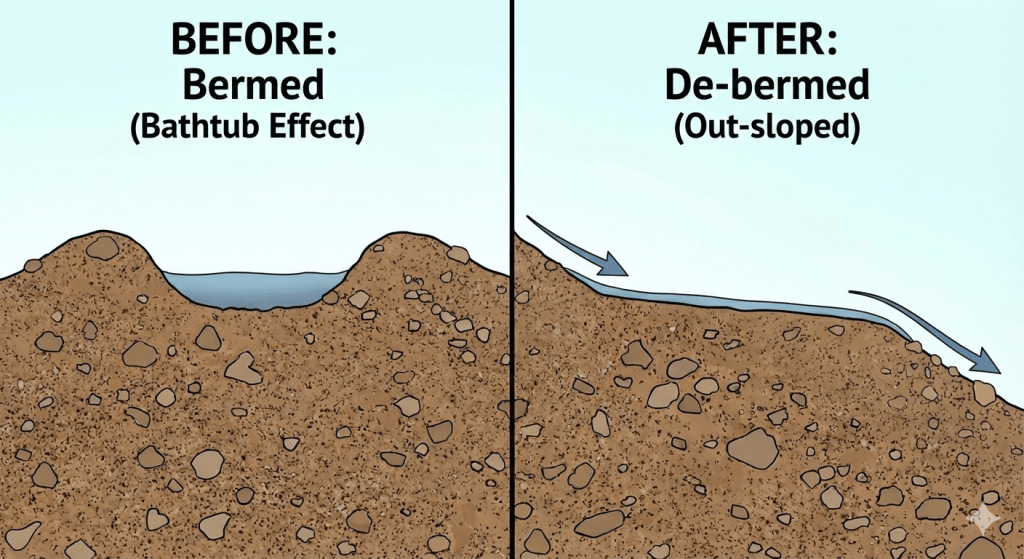
- The Principle: The trail tread should always be slightly out-sloped (1-5%) so water sheets off naturally.
- The Fix: “De-berming.” Use a McLeod or hazel hoe to pull the raised outer ridge of soil back into the trail tread or disperse it downhill.
- Willow Springs Specific: In our dry, dusty Front Range summers, do not just toss this soil away; if it is good mineral soil, re-integrate it into the tread to combat erosion.
3. Maintain the “Corridor” (The 4×8 Box)
Vegetation grows differently here—scrub oak can encroach aggressively at lower elevations, while heavy snow loads can bend pine branches into the trail at higher elevations.
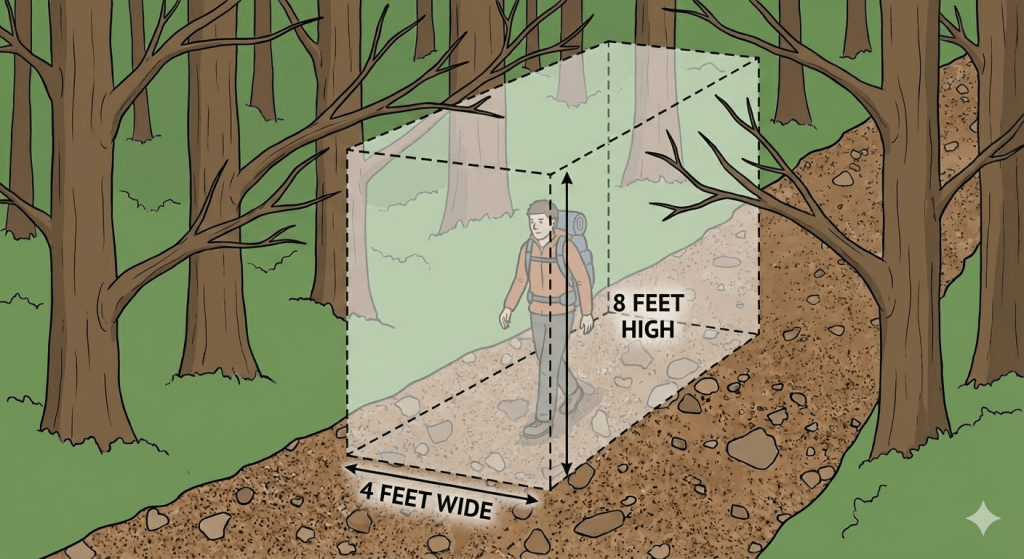
- The Principle: Visualize a clear box: 4 feet wide by 8 feet high. This allows safe passage for hikers, bikers, and equestrians.
- The Fix: Prune branches back to the “collar” of the tree trunk (do not leave sharp “coat hanger” stubs).
- Willow Springs Specific: When pruning for winter/snow-heavy areas, cut branches slightly higher (10 feet) to account for them drooping under snow weight, which can block early-season hikers.
4. Close and Restore “Social Trails”
Our dry and high-altitude ecosystems are incredibly fragile and take decades to recover from trampling. “Social trails” (unauthorized shortcuts) cause severe habitat fragmentation and erosion.

- The Principle: Keep users on the designated tread to protect the surrounding ecosystem.
- The Fix: Block shortcuts aggressively using “Visual Obstacles.” Don’t just place a small rock; plant deadfall (logs), vertical rocks, or brush (“vertical mulch”) to make the shortcut look unappealing and natural.
- Willow Springs Specific: Never pull rocks from the pristine areas to block a trail; only use loose rock already in the disturbed corridor to avoid expanding the damage. If possible, use local downed vegitation.
5. Inspect for “Monsoon” Damage
Colorado weather is cyclical. A trail that looks perfect in June can be destroyed by a single July afternoon storm. Static maintenance schedules don’t work here.

- The Principle: Maintenance should be responsive to weather events, not just the calendar.
- The Fix: Schedule “Rapid Response” surveys immediately following major monsoon events. Look specifically for “head-cuts” (where water has eaten a ledge into the trail) and clogged drains.
- Willow Springs Specific: Pay special attention to “armoring” (stone paving) in steep, loose areas where soil simply cannot hold the trail together against heavy rain.
Pro-Tip:
“Mud Season” Etiquette: The best maintenance practice during Mud Season (late Winter and Spring) is sometimes prevention. Walk and ride through the mud, not around it. Walking around widens the trail and destroys vegetation, creating a permanent, wide scar. Better still, wait a couple days and avoid the mud all togeather.